

Precision Optics SFP: Engineering Reliability for High-Stakes Telecommunications
Sunday, 23 August, 2026
Polarization control sits at the heart of modern optical engineering, and no component shapes that control more precisely than the waveplate. From laser systems and fiber optic communications to biomedical imaging and quantum optics, waveplates appear wherever engineers need to manipulate the phase relationship between polarization states with accuracy and repeatability.
Yet despite their widespread use, waveplates are frequently misunderstood or misapplied. Choosing the wrong retardance, mounting orientation, or material can quietly degrade system performance in ways that are frustratingly difficult to diagnose.
This guide is built for engineers and technical practitioners who already understand basic polarization concepts and want to move beyond surface-level familiarity. You will learn how waveplates work at a physical level, how to distinguish between half-wave and quarter-wave variants, how material selection affects performance across wavelengths and temperatures, and how to correctly specify and align waveplates within a real optical system. Practical design considerations, common pitfalls, and selection criteria are all covered in detail. By the end, you will have the working knowledge needed to apply waveplates with confidence in demanding engineering applications.
How Waveplates Work: Birefringence, Axes, and Retardance
At the heart of every waveplate lies a single foundational material property: birefringence. A birefringent material, such as crystal quartz, exhibits two distinct refractive indices along two orthogonal axes perpendicular to the direction of beam propagation. Light polarized along one axis encounters a different refractive index than light polarized along the other, meaning the two polarization components travel through the material at measurably different speeds. This velocity difference is what gives a waveplate its functional power as a polarization-control element.
Fast Axis, Slow Axis, and How They Govern Propagation
The two principal axes of a waveplate are designated the fast axis and the slow axis. The fast axis corresponds to the lower refractive index, allowing the polarization component aligned with it to propagate at a higher phase velocity. Conversely, the slow axis carries the higher refractive index, retarding the aligned polarization component as it travels through the optic. Both axes lie in the plane perpendicular to beam propagation and are oriented at 90° to each other. When an engineer specifies waveplate orientation in a system, aligning the input polarization at a precise angle relative to these axes determines the exact output polarization state.
Retardance: Accumulated Phase Difference
As the two polarization components traverse the waveplate thickness, the speed differential accumulates into a measurable optical path difference (OPD). This accumulated OPD is the retardance, expressed as Γ = (2π/λ) × Δn × d, where Δn is the birefringence magnitude and d is the physical thickness. Retardance is reported equivalently in waves (e.g., λ/4), degrees (e.g., 90°), or nanometers of absolute OPD. For a deeper treatment of the underlying physics, the RP Photonics Encyclopedia entry on waveplates provides rigorous mathematical formulations alongside a comprehensive supplier landscape.
Critically, a waveplate is a phase-only optical element. It neither absorbs incident light nor redirects or deflects the beam; it acts exclusively on the phase relationship between orthogonal polarization components. This distinguishes it fundamentally from absorptive polarizers or beam-steering optics, and it means that properly designed waveplates introduce negligible insertion loss into an optical system.
Quarter-Wave and Half-Wave Retardance
Two retardance values dominate practical applications. A quarter-wave plate (λ/4, 90° retardance) introduces a 90° phase shift between the two polarization components; when linearly polarized input is oriented at 45° to the fast axis, the output becomes circularly polarized, and the conversion is fully reversible. A half-wave plate (λ/2, 180° retardance) introduces a 180° phase shift, rotating the plane of linear polarization by twice the angle between the input polarization direction and the fast axis. For a thorough overview of how these principles apply across waveplate types, Understanding Waveplates and Retarders is a widely referenced industry resource. These two canonical retardance values underpin the majority of laser, imaging, and polarimetry system designs, and each maps directly to specific waveplate configurations covered in detail throughout the sections that follow.
Waveplate Types Explained and Compared
Building on the foundational principles of birefringence and retardance covered earlier, it becomes clear that no single waveplate design suits every application. Engineers and researchers must choose among several distinct waveplate architectures, each representing a specific set of trade-offs between cost, spectral bandwidth, thermal stability, and physical form factor. Understanding those trade-offs is essential for making an informed selection.
Multiple-Order Waveplates
Multiple-order waveplates are fabricated from a single piece of birefringent crystal, typically crystal quartz, whose thickness is chosen so that the total retardance equals the desired value plus several complete wavelengths (the “order”). This straightforward single-element construction makes them the lowest-cost and easiest waveplate type to manufacture, with thicknesses typically around 0.5 mm for standard visible-wavelength designs. The practical limitation is sensitivity: because the total accumulated retardance is large, even small shifts in wavelength or operating temperature produce proportionally significant changes in net retardance delivered to the beam. For fixed-wavelength, thermally stable laboratory setups where cost is a priority, multiple-order waveplates remain a serviceable choice. For tunable lasers, broadband sources, or thermally demanding environments, their performance limitations become critical constraints.
Low-Order Waveplates
Low-order waveplates occupy a practical middle ground in the performance-cost spectrum. They are fabricated thinner than full multiple-order designs, retaining only a small number of full-wave orders in their total retardance. Because the net retardance is smaller than a multiple-order plate, sensitivity to both wavelength shifts and temperature variation is reduced, though not eliminated as it is in a true zero-order design. This makes low-order waveplates a cost-effective option when the application demands better stability than a multiple-order plate provides but does not justify the added complexity or cost of a zero-order architecture.
True Zero-Order Waveplates
True zero-order waveplates deliver the highest level of wavelength and temperature stability among crystal-based designs. They are constructed by combining two birefringent crystal plates with their fast axes crossed; the individual retardances of the two elements subtract, leaving exactly the target retardance with no residual full-wave orders. The resulting net retardance is as small as physically possible, minimizing the sensitivity of the optic to environmental changes. Tower Optical manufactures true zero-order waveplates in diameters ranging from 10 mm through 4 inches, covering standard sizes of 25.4 mm, 38 mm, 50 mm, 3-inch, and 4-inch, with custom “any wavelength” variants available through its build-to-print manufacturing capabilities.
Cemented Zero-Order Waveplates
Cemented zero-order waveplates share the same crossed-axis, two-element construction as their air-spaced counterparts but bond the two birefringent plates together using optical cement, typically UV-cure epoxy. The result is a compact monolithic assembly, usually 1.5 to 2 mm in total thickness, that eliminates any air gap between the two crystal elements. This construction is particularly valuable in environments subject to mechanical vibration, shock, or tight assembly tolerances where even minor misalignment of an air-spaced pair would degrade polarization performance. The cemented format also simplifies mounting and reduces assembly risk during system integration.
Achromatic Waveplates
Achromatic waveplates address the fundamental limitation of single-material crystal designs: retardance that varies with wavelength. By combining two different birefringent materials, most commonly crystal quartz and magnesium fluoride (MgF₂), the differing dispersion curves of the two materials partially cancel each other. The result is consistent retardance across a broad wavelength bandwidth, making achromatic waveplates the preferred choice for broadband illumination, tunable laser systems, and white-light polarimetry. Tower Optical offers achromatic waveplates in both air-spaced (12.7 mm) and cemented (25.4 mm) configurations, supporting a wide range of integration requirements. For a detailed technical comparison of retarder performance parameters, understanding waveplates and retarders is a useful reference point.
Dual-Order and Compound Dual-Order Waveplates
Dual-order waveplates are engineered to simultaneously function as a half-wave retarder at one design wavelength and a quarter-wave retarder at a second design wavelength within the same optical element. This capability is highly valuable in multi-wavelength laser systems, such as those combining an Nd:YAG fundamental at 1064 nm with its second harmonic at 532 nm, where a single optic can replace what would otherwise require two separate waveplates. Compound dual-order designs extend this principle further, enabling more complex multi-wavelength polarization management within a single precision component.
Ultra-Thin Waveplates
Ultra-thin waveplates are manufactured to sub-millimeter thicknesses specifically to minimize wavefront distortion and beam displacement introduced by the optic itself. In high-power laser cavities and tight-tolerance intracavity assemblies, even small amounts of wavefront error introduced by optical elements can accumulate and degrade beam quality or mode performance. Ultra-thin designs reduce this error by minimizing the physical path length through the birefringent material, making them a preferred solution when the optical system budget for wavefront distortion is extremely constrained.
Fresnel Rhomb Retarders
Fresnel rhomb retarders represent a fundamentally different approach: rather than relying on birefringence to generate retardance, they exploit total internal reflection at precisely angled internal surfaces. Because the retardance mechanism is geometric rather than material-dependent, Fresnel rhombs are inherently achromatic across extremely broad bandwidths and are immune to the thermally induced retardance drift that affects all crystal-based designs. These advantages come with trade-offs; Fresnel rhombs are physically larger than crystal waveplates of equivalent retardance, and their performance is sensitive to the angle of incidence. They are most appropriate for broadband or white-light applications where spectral coverage or thermal stability outweighs the need for a compact form factor.
Selecting the right waveplate type requires mapping each design’s strengths directly to the demands of the target application, a process that benefits significantly from working with an experienced manufacturer capable of supplying both catalog inventory and fully custom precision optics.
Waveplate Materials: Crystal Quartz, MgF2, and Alternatives
Material selection is one of the most consequential decisions in waveplate design, and understanding the properties, trade-offs, and application boundaries of each option is essential for engineers specifying precision polarization optics.
Crystal Quartz: The Industry Standard
Crystal quartz remains the dominant material for precision waveplates, and for well-established reasons. It offers exceptional optical homogeneity, low absorption across the UV through near-IR spectrum (transmitting from approximately 150 nm into the mid-IR), excellent mechanical stability, and highly consistent birefringence that has been characterized and refined through decades of precision manufacturing. The material’s birefringence (the difference between its ordinary and extraordinary refractive indices, expressed as Δn) is predictable, repeatable, and well-documented across a wide temperature range. For programs where tight retardance tolerances and long-term stability are non-negotiable, such as aerospace instrumentation, defense laser systems, and national laboratory research, crystal quartz is the rational starting point. Its compatibility with precision AR coatings and its resistance to thermal shock further reinforce its position as the reference material in the field. Quartz crystal waveplates are manufactured across a broad range of configurations, from single-plate multi-order designs to two-plate zero-order assemblies, each suited to specific bandwidth and temperature-sensitivity requirements.
Magnesium Fluoride and Achromatic Pairing
The principal limitation of single-material crystal quartz waveplates is their inherent wavelength dependence: retardance shifts as the input wavelength changes. Magnesium fluoride (MgF₂) resolves this through complementary birefringence dispersion. When a quartz element is combined with an MgF₂ element in an achromatic waveplate assembly, the two materials’ dispersion curves partially offset each other, producing near-constant retardance across broad spectral bands, typically 400 to 700 nm for visible applications or 700 to 1000 nm for near-IR systems. This makes the quartz-MgF₂ pairing the standard architecture for achromatic waveplate designs used in broadband laser systems, fluorescence microscopy, and hyperspectral imaging platforms.
Lithium Niobate and Polymer Retarders
Lithium niobate (LiNbO₃) offers birefringence values significantly higher than quartz, enabling thinner optical elements for a given retardance. This is particularly valuable in electro-optic modulator designs where element thickness directly affects modulation bandwidth. However, LiNbO₃ exhibits greater sensitivity to temperature variation and requires careful handling due to its pyroelectric properties, making it a specialized choice rather than a general-purpose waveplate material.
Polymer retarder films occupy the opposite end of the performance spectrum. They can achieve very low cost and large aperture coverage, but they introduce measurable wavefront distortion, exhibit lower laser damage thresholds, and degrade more rapidly under thermal cycling than crystalline alternatives. For aerospace, defense, and high-power laser applications, polymer retarders are not a viable option.
Material Selection Criteria for Demanding Programs
For programs where performance margins are narrow, material selection must account for several interdependent criteria: UV transmission range, birefringence temperature coefficient (dΔn/dT), laser damage threshold (LDT), coating process compatibility, and supply chain compliance. The last factor is increasingly significant for defense and government programs, where ITAR-controlled supply chain requirements govern material sourcing and manufacturing location. Tower Optical’s USA-based manufacturing, ITAR registration, and ISO 9001:2015 certification directly address these compliance requirements, ensuring that material pedigree and process control meet the documentation standards demanded by Tier-1 defense contractors and national laboratories.
Temperature Sensitivity and Environmental Performance
Of the waveplate characteristics that matter most in real-world deployments, thermal behavior is frequently underestimated during the design phase and discovered too late during system integration. Understanding how temperature affects each waveplate type, and building that knowledge into component specifications from the outset, is essential for any optical system expected to perform reliably outside a controlled laboratory.
Multiple-Order Waveplates and Thermal Amplification
Multiple-order waveplates carry an inherent thermal liability rooted in their physical construction. Retardance is the product of birefringence and optical path length through the crystal, and both quantities shift with temperature. Because multiple-order plates must be physically thick to accumulate the required retardation across several full waves, even a small change in either the refractive index difference or the plate dimensions produces a measurable retardance error. Quantitative data illustrates the problem clearly: a multi-order half-waveplate at 1064 nm exhibits a temperature sensitivity of approximately 0.05 nm/°C of retardance drift. For a system maintaining polarimetric accuracy to a fraction of a wave, that figure accumulates quickly across a modest thermal excursion. In short, physical thickness that defines the multi-order design also amplifies its thermal vulnerability.
Zero-Order Designs and Thermal Compensation
Zero-order waveplates address this vulnerability through a cancellation architecture. The compound zero-order design pairs two birefringent plates with their slow and fast axes crossed; as temperature changes, the thermally induced retardance shift in the first plate is largely offset by an equal and opposite shift in the second. The result is a thermal sensitivity of approximately 0.006 nm/°C, roughly eight times lower than the multi-order equivalent, while simultaneously expanding usable spectral bandwidth nearly sevenfold. This performance profile makes zero-order waveplates well suited to laboratory instruments, airborne sensors, and other applications subject to moderate thermal cycling. For detailed comparisons of waveplate type performance across temperature and bandwidth, Tower Optical’s technical overview of zero-order vs. multi-order waveplates provides a practical engineering reference.
Achromatic Waveplates and Mounting Considerations
Achromatic waveplates introduce a different category of thermal risk. Because they combine crystal quartz and MgF₂ elements whose dispersion curves partially cancel, the retardation remains consistent across a broad spectral range. However, quartz and MgF₂ have different coefficients of thermal expansion, meaning the two materials expand and contract at different rates as temperature cycles. In a cemented configuration, differential dimensional change generates mechanical stress at the bonded interface. An improperly constrained cemented element can develop stress birefringence at temperature extremes, degrading the carefully engineered retardation uniformity across the aperture. Air-spaced achromatic configurations avoid the cement-interface stress problem entirely, and they also offer higher laser damage thresholds, making them preferable for high-power applications. Mechanical mount design must account for these material mismatches; a mount that clamps rigidly against the element perimeter can impose additional hoop stress during thermal cycling.
Environmental Qualification for Aerospace and Defense
For field-deployed electro-optical systems operating across the MIL-SPEC temperature range of -55°C to +125°C, retardance drift that appears small at the component level can exceed polarimetric error budgets at the system level. Specifying thermal performance requirements at the time of component procurement, rather than retrofitting after integration, is the only reliable path to managing this risk. Environmental qualification testing, including thermal cycling across the full operational range, validates that the waveplate retains its optical performance specification after repeated temperature excursions rather than simply at ambient conditions.
Tower Optical’s custom build-to-print capability allows defense and aerospace engineering teams to embed environmental performance requirements directly into component drawings and procurement documents. As an ITAR-registered, ISO 9001:2015 certified, and Service-Disabled Veteran-Owned Small Business, Tower Optical supports the full documentation chain that Tier-1 defense contractors and national laboratories require, from design traceability through inspection records and qualification data packages.
Half-Wave vs. Quarter-Wave Plates: Retardance Values and Applications
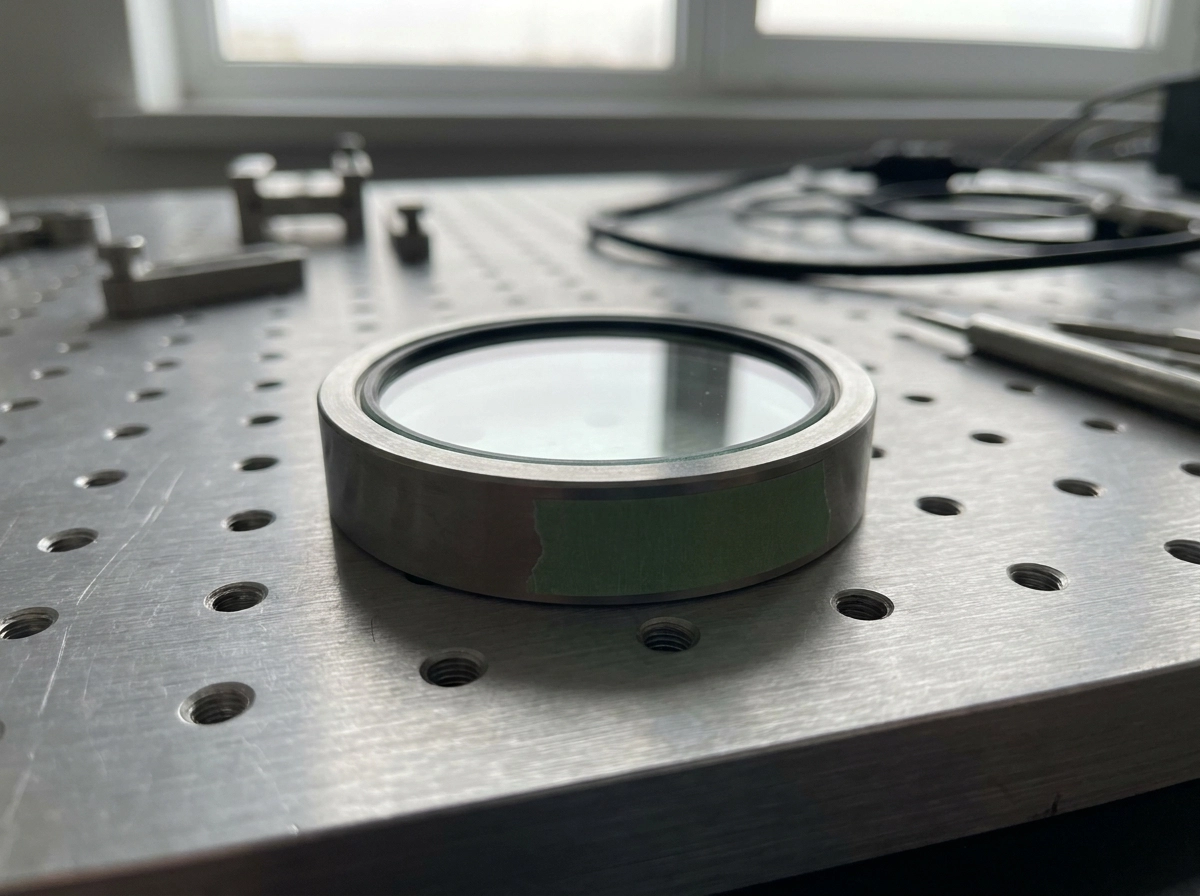
Among all waveplate configurations, the quarter-wave plate (QWP) and half-wave plate (HWP) represent the two most widely deployed retarder types in optical engineering. Understanding their distinct behaviors, tolerances, and application domains is fundamental for any engineer working with polarized light.
Quarter-Wave Plates (λ/4 Retardance)
A QWP introduces exactly 90° of phase retardance between the fast- and slow-axis polarization components. When linearly polarized light enters at 45° to the fast axis, both orthogonal components carry equal amplitude but emerge with a 90° phase offset, producing circularly polarized output. This linear-to-circular conversion is the defining QWP use case, underpinning critical functions in optical isolators, rotating-analyzer ellipsometers, and fiber-optic sensing systems. Rotating the input polarization angle away from 45° produces elliptical polarization states, which are themselves exploited in polarimetric instrumentation and Stokes parameter measurement setups.
Half-Wave Plates (λ/2 Retardance)
An HWP introduces 180° of phase retardance, which has the geometric effect of reflecting the polarization vector about the fast axis. The practical result is that the output polarization direction rotates by twice the angle between the input polarization and the fast axis. Set the fast axis at 45° to the input beam, and the output polarization rotates by exactly 90°. This makes HWPs the preferred tool for polarization steering in laser systems, tuning the split ratio at polarizing beamsplitters, and compensating birefringence-induced phase errors in Pockels cell assemblies. For a thorough treatment of the underlying physics, Understanding Waveplates and Retarders provides solid theoretical grounding.
Orientation Precision and Alignment Sensitivity
Orientation precision is not optional in high-performance systems. For an HWP delivering exactly 90° polarization rotation, the fast axis must be positioned at 45° to the input polarization within a tight angular tolerance. Even small misalignments introduce residual ellipticity into the nominally linear output, degrading the extinction ratio achievable at downstream polarizing elements. In systems requiring extinction ratios exceeding 1000:1, fast-axis alignment tolerances must be held to well under one degree. This is a manufacturing precision challenge, not merely an alignment challenge, making the quality of the waveplate’s optical axis orientation a direct determinant of system performance.
Non-Standard Retardance Values
Beyond the canonical λ/4 and λ/2 values, applications in spectroscopic ellipsometry, optical coherence tomography, and polarimetric remote sensing often require retardance values such as λ/3, λ/8, or arbitrary values expressed in nanometers at a specified design wavelength. Tower Optical’s custom build-to-print capabilities address precisely these requirements, allowing engineering teams to specify retardance, substrate material, wavelength, and form factor to match system-level polarization budgets without compromise.
Configuration Options: Zero-Order and Achromatic
Both QWP and HWP variants are available from Tower Optical in zero-order and achromatic configurations. Zero-order designs offer superior thermal stability and reduced sensitivity to wavelength deviations, making them well-suited for stabilized laser applications. Achromatic configurations extend consistent retardance across a broad spectral bandwidth, critical for ultrafast laser systems and broadband polarimetry. Selecting between these options requires balancing bandwidth requirements, operating environment, and cost constraints. Tower Optical’s ISO 9001:2015 certified manufacturing processes and ITAR-registered facility ensure that both off-the-shelf and custom-specified retarders meet the dimensional and angular tolerances defense and research-grade systems demand.
Waveplate Applications by Industry
Aerospace and Defense
Waveplates serve as load-bearing polarization components across the most demanding defense and aerospace platforms in service today. In electro-optical and infrared targeting systems, precisely calibrated retarders maintain the polarization integrity of tracking beams and detector illuminators across extended thermal ranges and mechanical vibration environments. Laser rangefinders, directed-energy weapon beam trains, and polarimetric remote sensing instruments each impose unique retardance stability requirements that standard commercial optics frequently cannot meet. For defense procurement programs, ITAR-registered domestic sourcing is not simply a preference; it is commonly a contractual and regulatory mandate. Tower Optical’s ITAR registration directly satisfies this requirement, making the company a compliant, auditable domestic supplier for Tier-1 defense contractors and national laboratories operating under strict supply chain governance.
Medical Devices and Life Sciences
In the life sciences sector, quarter-wave plates occupy critical positions within systems where polarization state accuracy determines clinical or experimental outcomes. Optical coherence tomography (OCT) instruments used for retinal imaging and cardiovascular diagnostics rely on QWPs to generate and analyze circularly polarized probe beams with retardance uniformity across the full clear aperture; even sub-percent retardance variation translates into measurable degradation in cross-sectional image resolution. Fluorescence microscopy platforms use waveplates for polarization excitation control to enhance contrast and minimize background scatter. Flow cytometry systems employ waveplate-based beam conditioning to optimize laser beam polarization for particle interrogation accuracy. In every one of these applications, the manufacturing tolerance on retardance uniformity is not a secondary specification; it is the primary performance driver. The inorganic waveplates market research identifies precision medical imaging equipment as an explicit growth driver for the broader waveplate category through 2034.
Telecommunications and Fiber Optics
Polarization management is a foundational requirement in coherent optical communications architectures. Waveplates integrated into coherent optical transceivers, in-line polarization controllers, and optical amplifier pump combiners must perform reliably at the standard 1310 nm and 1550 nm telecom transmission windows. Zero-order and achromatic waveplate designs are strongly preferred in these environments because their retardance remains stable across temperature fluctuations that cause thermally sensitive multiple-order designs to drift. The North America air-spaced zero-order waveplate market was valued at $161 million in 2025 and is projected to reach $332 million by 2035, with telecommunications identified as a primary growth sector. Tower Optical’s zero-order waveplate product line spans 10 mm through 4-inch diameter and includes custom wavelength variants that accommodate non-standard telecom or CWDM channel assignments.
Laser Systems and Advanced Research
High-power laser systems impose the most rigorous waveplate specifications encountered across any commercial application category. Waveplates deployed in cavity designs, beam combination systems, and amplifier chains must exhibit high laser damage thresholds, minimal absorption at the operating wavelength, and transmitted wavefront quality at the λ/10 level or better. Ultra-thin zero-order waveplates and Fresnel rhombs are routinely specified in coherent beam combination architectures at national laboratories and research institutions where cumulative wavefront error across multiple optical elements determines whether the combined beam achieves diffraction-limited performance. Quantum computing and quantum information research represent an emerging application frontier, where precise polarization control of narrowband pump lasers and entangled photon sources demands waveplates with calibrated, repeatable retardance. Tower Optical’s ISO 9001:2015 certified manufacturing processes and build-to-print custom capabilities directly serve these research environments where off-the-shelf catalog solutions are rarely sufficient.
Semiconductor Inspection and Lithography
Semiconductor wafer inspection and deep-UV lithography represent perhaps the most tolerance-critical waveplate application environment. In these systems, waveplates control the polarization state of the illumination beam at points in the optical train where aperture-averaged retardance non-uniformity maps directly onto inspection measurement error or lithographic contrast reduction. Deep-UV lithography tools operating below 250 nm require waveplate materials and coatings compatible with the high photon energies and short coherence lengths of excimer laser sources. Retardance uniformity specifications in these platforms regularly exceed the requirements of any other application category covered here. Tower Optical’s custom build-to-print manufacturing capabilities, combined with its domestic SDVOSB status and ISO 9001:2015 quality system, position the company to serve semiconductor capital equipment OEMs that require both tight optical tolerances and fully documented, traceable domestic supply chains.
How to Select the Right Waveplate: A Practical Checklist
Selecting the right waveplate requires working through a structured set of engineering decisions before committing to a design or placing a procurement order. The six steps below provide a practical framework for matching waveplate specifications to system requirements.
Step 1: Define Operating Wavelength and Bandwidth
Begin by characterizing your light source. Single-wavelength laser applications with narrow linewidth are well-served by either multiple-order or zero-order designs, since the retardance specification can be held precisely at one wavelength. When the source is broadband, such as an LED, white-light illuminator, or tunable laser spanning tens to hundreds of nanometers, retardance will shift unacceptably across the band unless an achromatic design is selected. Achromatic waveplates, fabricated from two birefringent materials such as crystal quartz and magnesium fluoride, maintain consistent retardance across the spectral range by balancing the dispersion of each material against the other. Fresnel rhomb retarders represent an alternative achromatic solution for applications where a bulk-glass geometry is acceptable.
Step 2: Specify Retardance Value and Tolerance
Determine whether your application requires a quarter-wave (90-degree phase shift), half-wave (180-degree phase shift), or a non-standard retardance value. Once the nominal retardance is set, define the acceptable error budget. High-extinction-ratio polarimetry systems or precision interferometers may demand retardance accuracy as tight as ±λ/300, while less demanding polarization-rotation applications may tolerate ±λ/100. Retardance error maps directly to polarization purity loss and downstream extinction ratio degradation, so this tolerance should be derived from system-level signal-to-noise or contrast requirements rather than selected arbitrarily.
Step 3: Evaluate Thermal and Environmental Requirements
Temperature directly affects retardation in every waveplate design, but the sensitivity varies significantly by type. Multiple-order plates carry high sensitivity to both temperature and wavelength because their effective retardance is the accumulated difference across many full wave cycles. Zero-order designs, whether true zero-order or compound quasi-zero-order, offer substantially better thermal stability. For airborne, space-qualified, or field-portable deployments, a cemented or air-spaced compound zero-order assembly with a thermally stable mount is typically required. Humidity exposure, vibration load profiles, and thermal cycling amplitude should all be cataloged before finalizing the design, since these parameters govern the choice between cemented and air-spaced configurations as well as mounting hardware material selection.
Step 4: Determine Aperture, Form Factor, and Mounting Constraints
Standard circular waveplate apertures ranging from 10 mm through 4-inch diameter are available from Tower Optical’s off-the-shelf inventory, covering the majority of laser beam and imaging system geometries. When the optical architecture requires a waveplate with a centered through-hole for coaxial beam configurations, a partial waveplate covering only a defined sector of the clear aperture, or a non-circular aperture profile, a custom build-to-print engagement is required. Tower Optical’s manufacturing infrastructure supports all three specialty form factors, and early engagement with the engineering team accelerates drawing review and first-article lead times.
Step 5: Assess Coating Requirements
Uncoated waveplate surfaces introduce approximately 4 percent reflective loss per surface in the visible range, and back-reflections from uncoated optics can destabilize laser cavities through optical feedback. Anti-reflection coatings tailored to the operating wavelength are therefore standard practice. V-coat designs optimized for a single laser wavelength deliver the lowest possible reflectance at that line, typically below 0.2 percent per surface, but performance degrades rapidly outside the design wavelength. Broadband AR coatings provide acceptable low-reflectance performance across a wider spectral window and are the correct choice for tunable or multi-line laser systems. Coating selection must also account for laser damage threshold requirements; high-power pulsed laser applications demand coatings specified and tested to the relevant ISO 21254 damage threshold standards.
Step 6: Confirm Supply Chain and Compliance Requirements
Defense programs, national laboratory procurements, and regulated medical device programs frequently impose supply chain requirements that go beyond optical specifications. ITAR-controlled programs require domestic US manufacturing from an ITAR-registered facility. Quality management system requirements often mandate ISO 9001:2015 certification with documented material traceability. Programs administered under small business set-aside provisions may require SDVOSB-eligible suppliers. Tower Optical satisfies all four criteria: ITAR-registered, ISO 9001:2015 certified, fully traceable US-sourced materials, and certified as a Service-Disabled Veteran-Owned Small Business. Engaging a supplier that consolidates all four compliance attributes under one roof eliminates the audit burden of qualifying multiple vendors and simplifies program documentation throughout the product lifecycle.
Custom Build-to-Print vs. Catalog Waveplates: When Each Makes Sense
Choosing between catalog waveplates and custom build-to-print fabrication is a procurement decision with real engineering, schedule, and cost consequences. Getting it right requires an honest assessment of where your application’s requirements sit relative to standard product envelopes.
When Catalog Waveplates Deliver Maximum Value
Off-the-shelf waveplates are the correct choice when your application aligns with industry-standard configurations. Programs operating at common laser wavelengths, specifically 532 nm, 633 nm, 1064 nm, and 1550 nm, with conventional quarter-wave or half-wave retardance values and circular apertures in standard sizes, benefit from catalog procurement in two critical ways: zero non-recurring engineering cost and immediate or near-term availability. Tower Optical’s stock zero-order and achromatic waveplate inventory covers many of these configurations, including zero-order waveplates from 10 mm through 4-inch diameter and achromatic waveplates in both air-spaced and cemented formats. For cost-sensitive or schedule-driven programs where technical requirements fit squarely within this envelope, there is no engineering justification to pursue custom fabrication.

When Custom Build-to-Print Is the Right Path
Custom build-to-print manufacturing becomes necessary when application requirements fall outside catalog coverage. Specific triggers include non-standard wavelengths in UV or mid-IR bands, large-format apertures in the 3- to 4-inch diameter range or larger, non-circular aperture geometries, non-standard retardance values such as lambda/3 or lambda/8, centered-hole configurations for beam-through-hole optical assemblies, and partial waveplate designs covering only a defined portion of the clear aperture. In the build-to-print model, the customer retains full engineering drawing ownership while Tower Optical executes fabrication precisely to the provided specifications, preserving design control and intellectual property throughout the program. Tower Optical’s build-to-print manufacturing approach spans material sourcing, crystal fabrication, AR coating, dimensional inspection, and optical performance verification under a single quality management umbrella.
Rapid Prototyping, TCO, and Qualification Efficiency
Domestic manufacturing infrastructure provides a significant advantage during engineering development phases. Tower Optical supports fast prototype iteration cycles that allow optical engineers to validate a custom waveplate design before committing to production quantities, a capability identified as a strategic value-add for OEM programs requiring design validation ahead of full-rate production.
For defense and regulated medical device programs, total cost of ownership analysis frequently favors domestic custom manufacturing even when offshore unit prices appear lower. ITAR compliance overhead, import risk management, and supply chain qualification auditing for offshore optical components routinely exceed the unit price premium of a U.S.-manufactured part. Tower Optical’s ITAR registration and SDVOSB status make it a natural supply chain fit for Tier-1 defense contractors operating under strict sourcing requirements.
Finally, Tower Optical’s ISO 9001:2015-certified quality management system ensures that every custom build-to-print waveplate ships with complete manufacturing documentation, dimensional inspection records, and optical performance test data. This documentation package directly reduces the qualification burden for customers operating under AS9100, 21 CFR Part 820, or equivalent frameworks, where supplier qualification audits require traceable evidence of process control and product conformance.
Why US-Manufactured Waveplates Matter for Defense and Regulated Programs
For defense and regulated programs, the country of origin and compliance posture of an optical component manufacturer is not a secondary consideration; it is a gating requirement. Waveplates integrated into electro-optical and infrared targeting pods, laser weapon subsystems, polarimetric sensor arrays, or classified directed-energy platforms are frequently subject to ITAR controls under USML Category XII, which governs fire control, range-finding, optical guidance, and control equipment. Under this framework, both the manufacturer and every tier of its supply chain must hold active ITAR registration with the U.S. Department of State to legally produce, handle, and transfer the associated hardware and technical data. Sourcing a controlled waveplate from an unregistered or offshore supplier does not simply create a paperwork problem; it can trigger export licensing requirements, program hold events, and potential DDTC enforcement exposure for the prime contractor.
Tower Optical Corporation holds active ITAR registration, enabling Tier-1 defense contractors and prime integrators to procure waveplates directly while keeping the supply chain within a fully compliant, U.S.-person-controlled manufacturing environment. Technical drawings, program-specific optical prescriptions, and build-to-print specifications remain protected within Tower Optical’s secured facility, consistent with the access control and document security protocols that ITAR-registered manufacturers are required to maintain. This directly reduces the compliance overhead that procurement and contracts teams would otherwise face when qualifying an offshore or non-registered domestic source.
Beyond ITAR, Tower Optical’s ISO 9001:2015 certification provides OEM customers with a pre-validated quality management framework that covers the full manufacturing workflow: incoming crystal material inspection, in-process dimensional and optical verification against specified retardance and wavefront error tolerances, final acceptance testing, and formal nonconformance disposition. For customers whose own quality systems operate under AS9100D or FDA 21 CFR Part 820, this certification reduces the qualification audit burden and provides documented process evidence that supports first-article approval packages and supplier qualification records.
Tower Optical’s Service-Disabled Veteran-Owned Small Business certification adds a concrete procurement advantage that is often underappreciated at the component level. Federal contracts and defense programs that carry SDVOSB set-aside requirements, or that award socioeconomic scoring credit to prime contractors, respond favorably to supply chain partners with verified SDVOSB status. For prime contractors managing federally mandated small business subcontracting plans, placing waveplate procurement with Tower Optical contributes measurable credit toward those plan obligations during proposal evaluation and contract compliance reviews.
The broader supply chain risk argument reinforces all of the above. With at least 98 global waveplate suppliers listed in the RP Photonics Buyer’s Guide as of 2026, and a substantial proportion of those suppliers located overseas, the market offers no shortage of catalog options. However, as analysts tracking domestic manufacturing for defense partners consistently note, offshore sources introduce traceability gaps, covered-nation risk under NDAA provisions, and lead time uncertainty that can affect program continuity. Efforts to rebuild America’s military optics supply chain reflect a recognized national security priority, and the covered-nation supply chain risks under the NDAA present a direct compliance hazard when procurement teams consider lower-cost offshore waveplate sources. A U.S.-based manufacturer with active ITAR registration, ISO 9001:2015 certification, and SDVOSB status provides program continuity assurance that no offshore catalog source can replicate.
Tower Optical Waveplate Capabilities and How to Get Started
Tower Optical’s waveplate product line is designed to meet both immediate procurement needs and the most demanding custom engineering requirements in precision photonics. The catalog includes crystal quartz zero-order waveplates spanning diameters from 10 mm through 4 inches, available at any wavelength, covering standard retardance values for quarter-wave and half-wave configurations. Achromatic waveplates are stocked in two configurations: air-spaced at 12.7 mm and cemented at 25.4 mm, delivering consistent retardance across broader wavelength bandwidths for applications where spectral stability is critical. Standard catalog items ship with short lead times, making them a practical choice for OEM teams managing tight integration schedules or research programs operating under budget cycles.
For programs that exceed catalog parameters, Tower Optical’s custom build-to-print program addresses a wide range of specialty form factors. Engineering teams can specify waveplates with centered holes for beam-path integration, partial waveplates for specialized polarization control, and large-format optics at 3- to 4-inch diameters for high-aperture laser and imaging systems. Non-standard retardance values and custom anti-reflection coatings, optimized for specific wavelengths or broadband ranges, are also available through this program. Every custom configuration is manufactured to customer-supplied drawings and specifications, with Tower Optical’s engineering team providing application guidance throughout the quoting process.
This depth of capability is backed by over 45 years of precision optical manufacturing experience, serving aerospace, defense, medical device, telecommunications, laser, and advanced research customers since 1978. Tower Optical holds ISO 9001:2015 certification, maintains active ITAR registration with the U.S. State Department, and is a certified Service-Disabled Veteran-Owned Small Business, credentials that matter directly to defense prime contractors, national laboratories, and regulated OEM programs.
To initiate a catalog order or submit a custom waveplate RFQ, contact Tower Optical’s engineering team with your target wavelength, required retardance, aperture, environmental specifications, and any compliance documentation needs. You can review the full waveplate catalog and configuration options at Tower Optical’s waveplate selection resource before reaching out.
Conclusion: Choosing the Right Waveplate for Your Application
Selecting the right waveplate follows a clear hierarchy: begin with operating wavelength and bandwidth to narrow the viable waveplate type, then define required retardance and tolerance, then evaluate thermal stability and environmental exposure, and finally confirm form factor dimensions and compliance constraints. Each decision gates the next, and skipping a step early in the process routinely produces costly redesigns or qualification failures downstream.
For defense programs and regulated medical device applications, ITAR registration, ISO 9001:2015 certification, and SDVOSB status are not optional supplier attributes. They are procurement requirements that materially reduce the qualified supplier field before a single specification is reviewed.
Tower Optical’s applications engineering team is available as a direct selection resource, whether your requirement is a standard catalog zero-order or achromatic waveplate, or a fully custom build-to-print component with specialty geometry, environmental qualification documentation, and traceability records.
Contact Tower Optical today to request a quote or discuss your waveplate specifications with our engineering team. From 10mm zero-order retarders to large-format custom builds, we are equipped to support your program from initial specification through delivery.
